


|
Key Takeaways
|
Buy your usual size. An oversized t-shirt is drafted differently from a regular one, with a wider body, a dropped shoulder and a longer sleeve already built in. Sizing up on top of that adds volume the design did not intend, which is how a relaxed tee turns into a shapeless one.
What is the real difference between an oversized and a regular fit t-shirt?
The difference is in the pattern, not the label. A regular fit t-shirt is cut close to the body's natural line: the shoulder seam sits on the edge of your shoulder bone, the body skims without clinging, and the sleeve ends mid-bicep. An oversized tee moves the shoulder seam 4–8 cm down the upper arm, widens the body through the chest and waist, and drops the hem lower. Both exist in the same size range.
|
Oversized fit |
Regular fit |
|
|
Shoulder seam |
Drops 4–8 cm down the arm |
Sits on the shoulder bone |
|
Body width |
Wide, straight, no waist shaping |
Follows the torso line |
|
Length |
Longer, often hits upper hip |
Ends at hip bone |
|
Sleeve |
Longer, wider opening |
Mid-bicep, closer opening |
|
Drape |
Falls away from the body |
Skims the body |
|
Best for |
Casual, layering, all-day comfort |
Work, tucking in, structured looks |
Should you size up when buying an oversized t-shirt?
No, in almost every case. The volume is already in the pattern. Sizing up adds width where you do not need it and pushes the shoulder seam close to your elbow, which reads as ill-fitting rather than relaxed.
There is one exception. If you want a t-shirt dress or a genuinely extreme silhouette, one size up is deliberate. Treat that as a styling choice, not as a sizing correction.
Which fit is more flattering for your body type?
Both work on every frame. What changes is where the proportion needs balancing.
Petite frames
Oversized works, but length is the risk. A tee that ends mid-thigh shortens the leg line. Choose an oversized cut that ends at the hip bone, or half-tuck the front. A regular fit is the safer default if you want the outfit to read as neat rather than casual.
Broader shoulders or a fuller bust
Regular fit usually looks cleaner here, because a dropped shoulder adds width exactly where you already have it. If you want oversized, pick a mid-weight fabric that falls away from the bust rather than a thin knit that clings across it.
Straight or athletic frames
Oversized adds shape where the body is linear, which is why it reads well on straight frames. Pair it with a fitted bottom so the volume stays on top.
Which fit works better for everyday wear in Indian weather?
Oversized, for most of the year. Air moves under a loose knit, and less fabric touches the skin, which matters in humid conditions from March to September. Regular fit is the better pick when you need to layer under a jacket or shirt, or when the tee has to look tidy tucked into trousers.
Fabric weight decides comfort more than fit does. A thin oversized tee sticks to damp skin and looks limp; a mid-weight cotton holds its drape. That is also why the same tee behaves differently after a few months, which comes down to how it is washed rather than how it was cut.
How do you judge the fit from an online product page?
Use three checks, in this order.
- Chest measurement in centimetres. Find a tee you already own and like, measure it flat from armpit to armpit, double it, and compare against the size chart. Ignore the letter.
- Shoulder drop. If the product photo shows the seam on the model's upper arm, it is drafted oversized. If it sits on the shoulder, it is regular, whatever the description says.
- Length. Check the stated body length against your existing tee. A 4 cm difference is visible when worn.
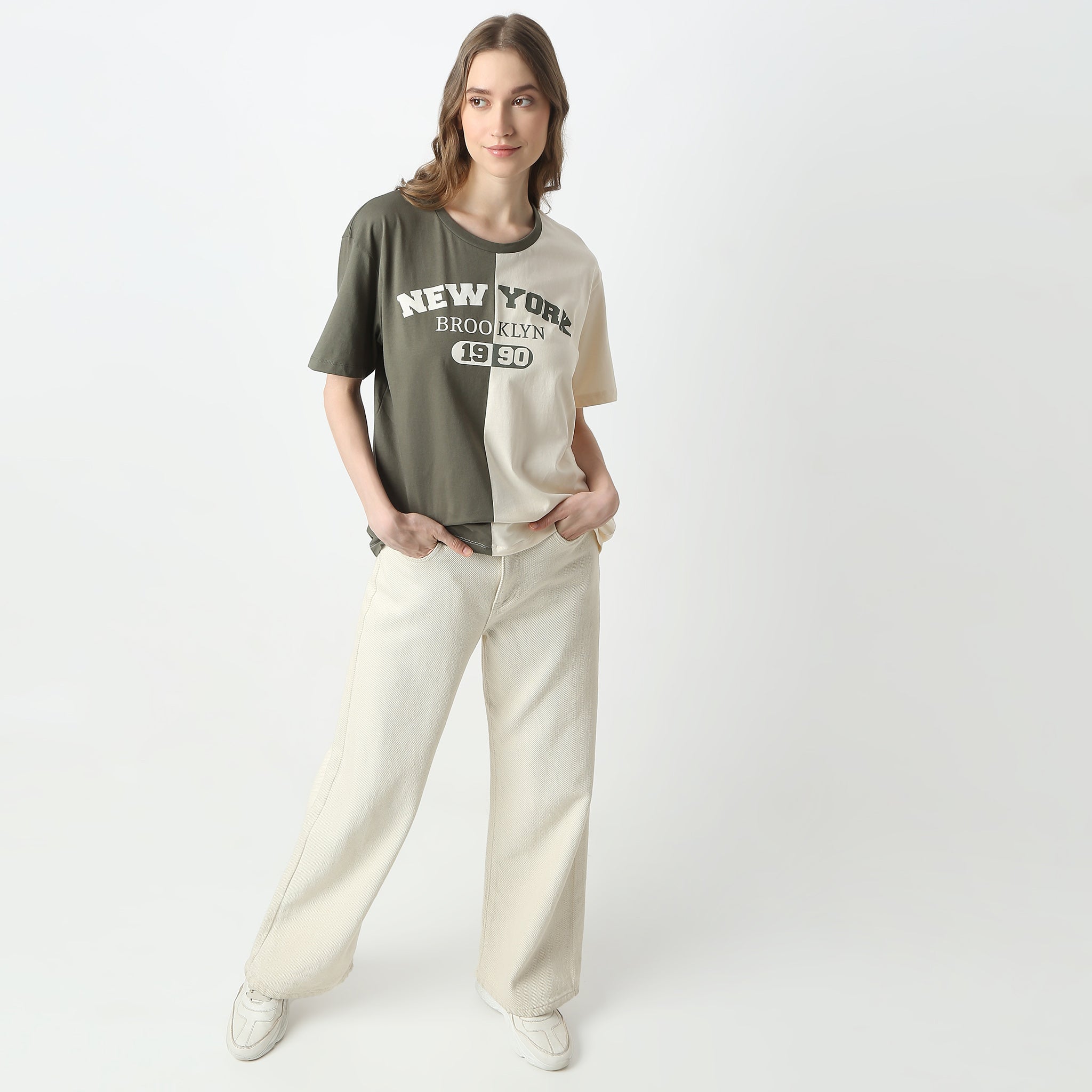
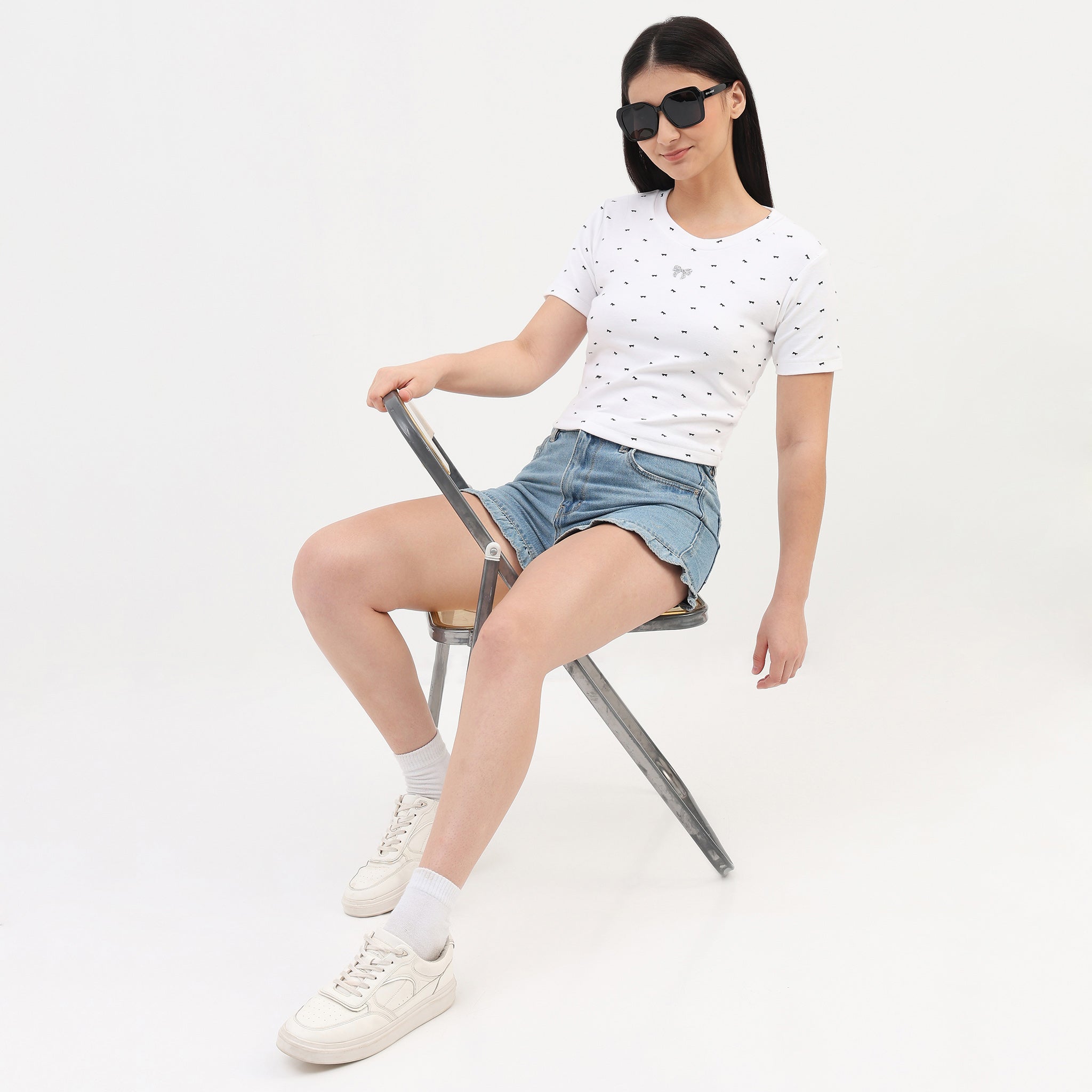
The women's t-shirts at Style Union list chest and length measurements per size, so all three checks can be done before you order. If you are still deciding between silhouettes, seven ways to style an oversized t-shirt covers what to wear it with once the size is right, and the different types of tops for women explained sets out where each cut fits in a wardrobe.
When should you choose a regular fit instead?
Choose regular when the tee has a job beyond comfort. Tucking into high-waist trousers, layering under a blazer or shirt, or any setting where the outfit needs a defined line. Regular fit also photographs better under a jacket, because the shoulder seams stack correctly instead of bunching.
The rule you can carry to any product page: check the shoulder seam and the chest measurement in centimetres, and ignore the letter on the label. That single habit removes most online sizing mistakes.
Style Union runs 170+ stores across India, holds a 4.8-star Google rating and 16 lakh+ customer reviews, and drops 150+ new styles every week.


