


To wear ethnic wear for office days well, focus on three things: structured silhouettes like straight-cut and A-line kurtas, breathable fabrics like cotton and viscose, and minimal embellishment. Together, these keep the outfit professional without losing the ease of ethnic wear.
The question isn't really whether ethnic wear belongs at a desk. It's whether the specific kurta in your cart will survive a nine-hour day, three meetings and a commute without looking like you slept in it. That's a fit and fabric problem more than a style one, and it's worth solving properly if you're planning to wear it five days out of seven, not just for the odd festive Friday.
|
Key Takeaways
|
Is ethnic wear appropriate for the office?
Yes, with a few conditions. Most Indian offices, even fairly conservative ones, treat a well-structured kurta or kurti the same way they'd treat a shirt dress: professional as long as the silhouette is clean, the fabric isn't sheer or clingy, and the embellishment stays minimal. Where ethnic wear for office loses points isn't the ethnicity of it, it's when the kurta is too loose, too printed, or paired with the wrong bottom. Get those three things right and a kurta earns the same respect a blazer does.
Which kurta silhouettes look most professional at work?
Three silhouettes cover almost every desk scenario worth dressing for, and if you already own a few kurta sets from festive season, how to style kurta sets for different occasions has more ideas for pulling them into weekday rotation too.
Straight-cut kurta
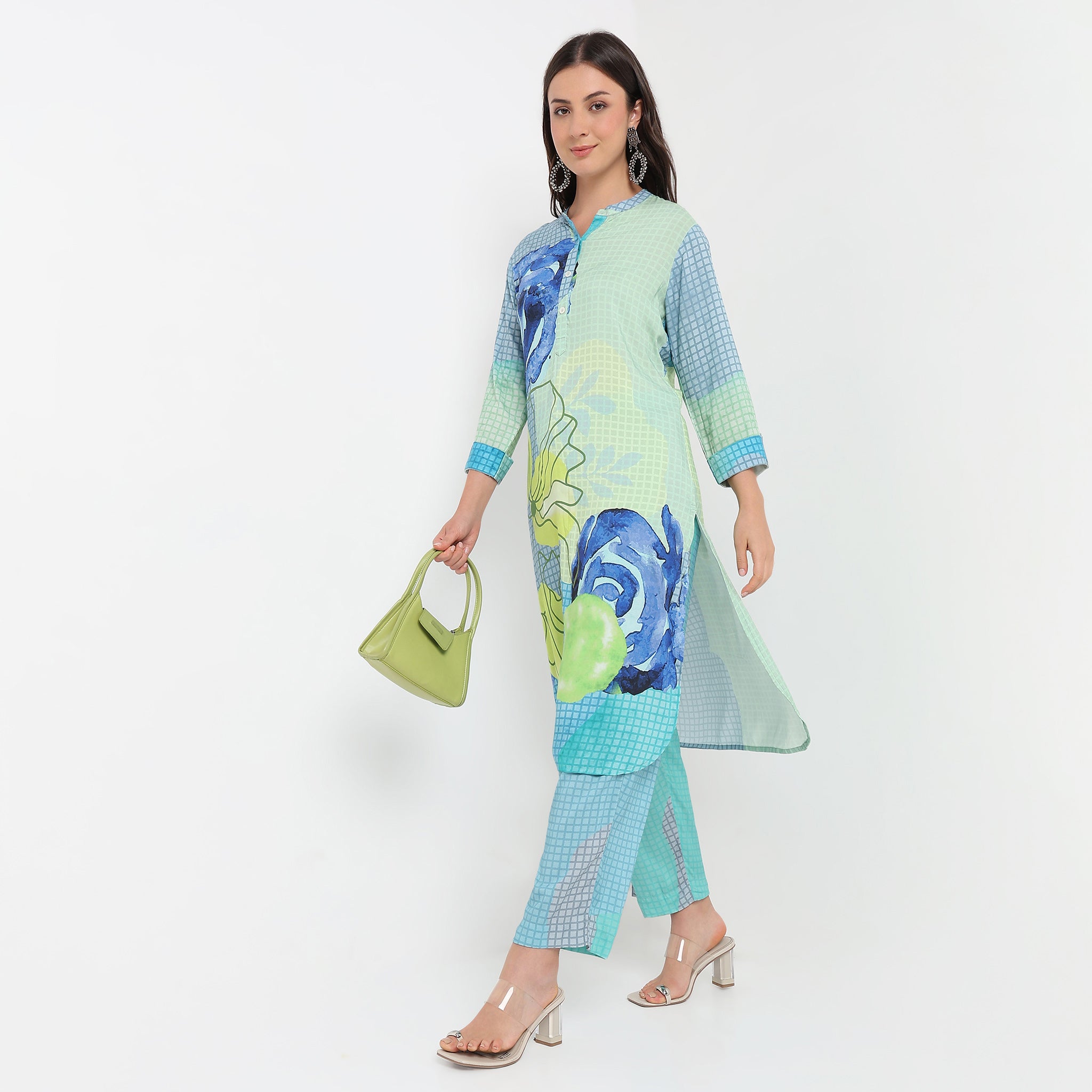
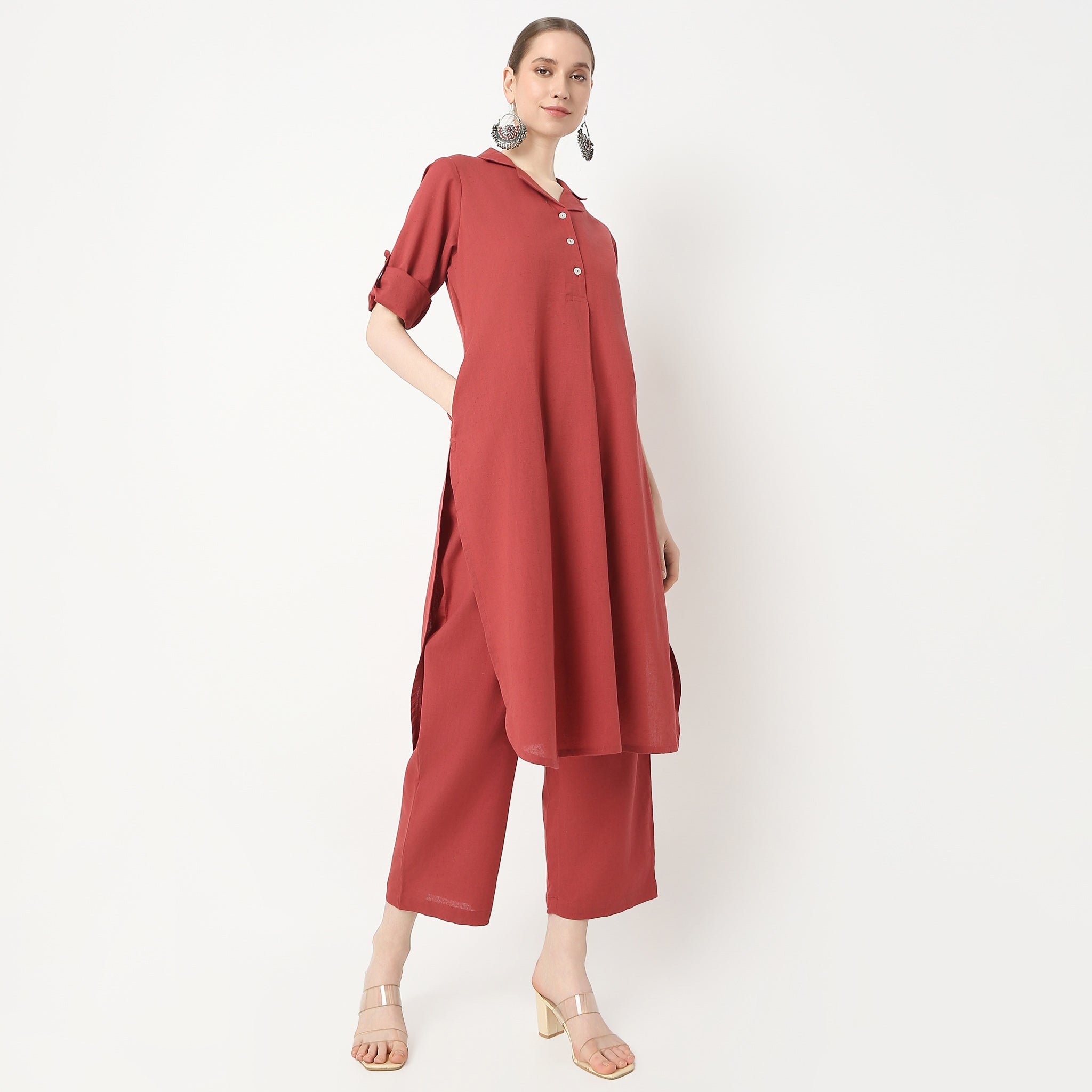
- The pick: a straight-cut kurta, ideally below-knee length, since that's the length that reads tailored rather than tunic-casual.
- Why it reads professional: the clean vertical line does the same visual job a sheath dress does, no extra volume for a blazer or cardigan to fight against.
- Best paired with: tailored straight pants or cigarette pants in a matching or contrasting solid.
- Avoid: anything with a flared kali or heavy panel work; it reads festive rather than formal.
A-line kurta
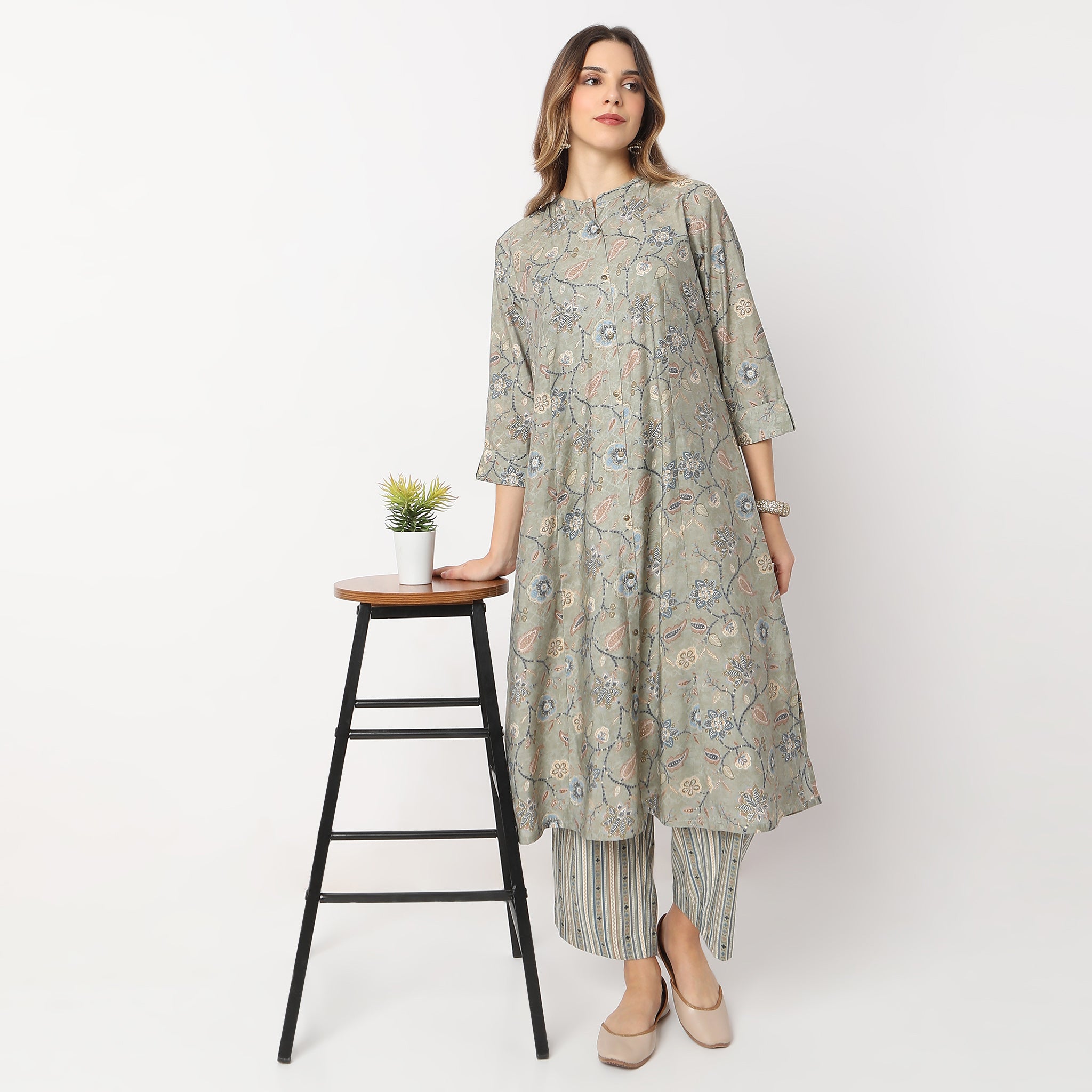
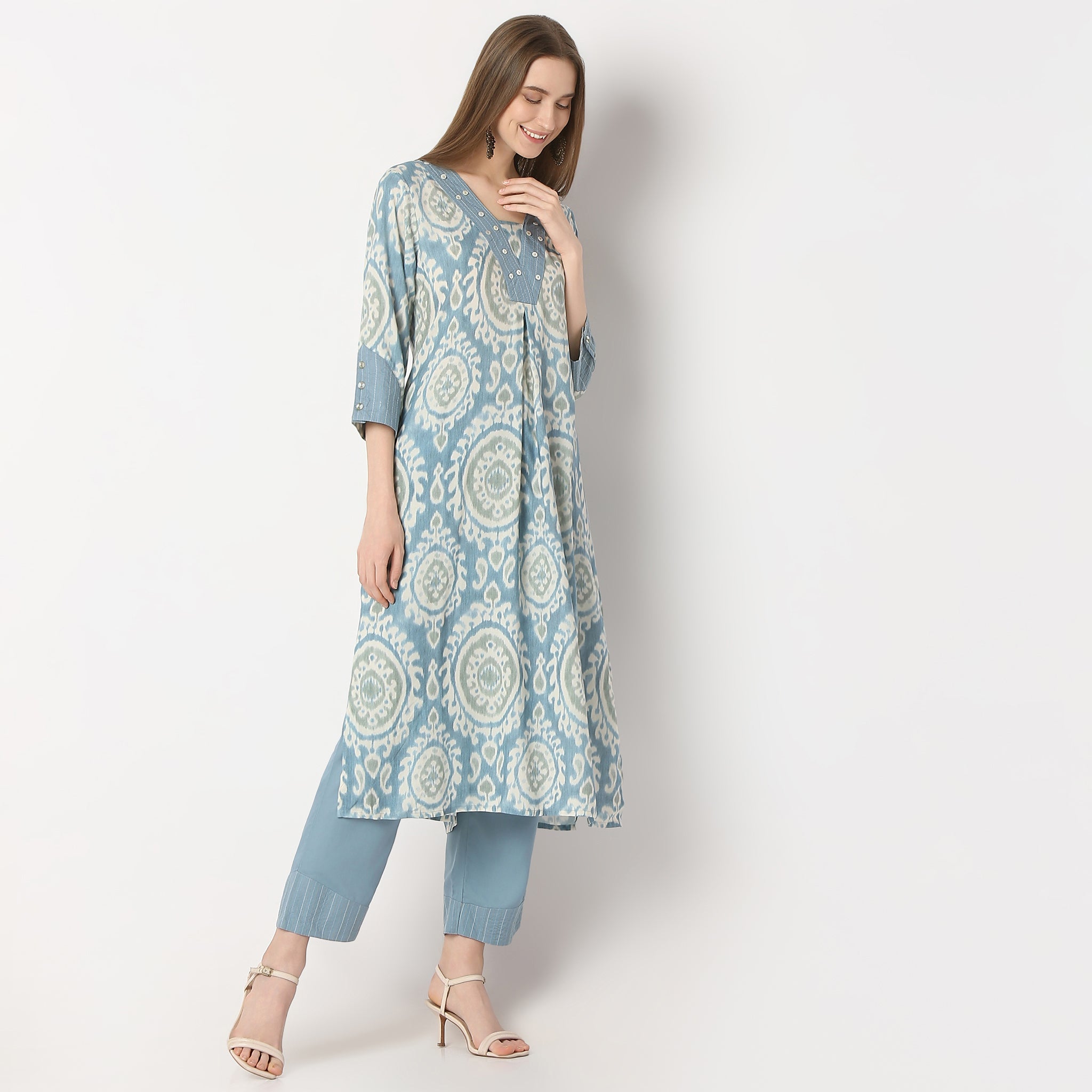
- The pick: an A-line kurta, which flares gently from the bust rather than the waist.
- Why it reads professional: it's forgiving through a long sitting day without looking shapeless, closer to a structured shift dress than a loose tunic.
- Best paired with: straight palazzos or slim-fit trousers, never a wide palazzo, which competes with the flare on top.
- Avoid: heavy jewellery, the silhouette already does the visual work, so keep accessories minimal.
Short kurti
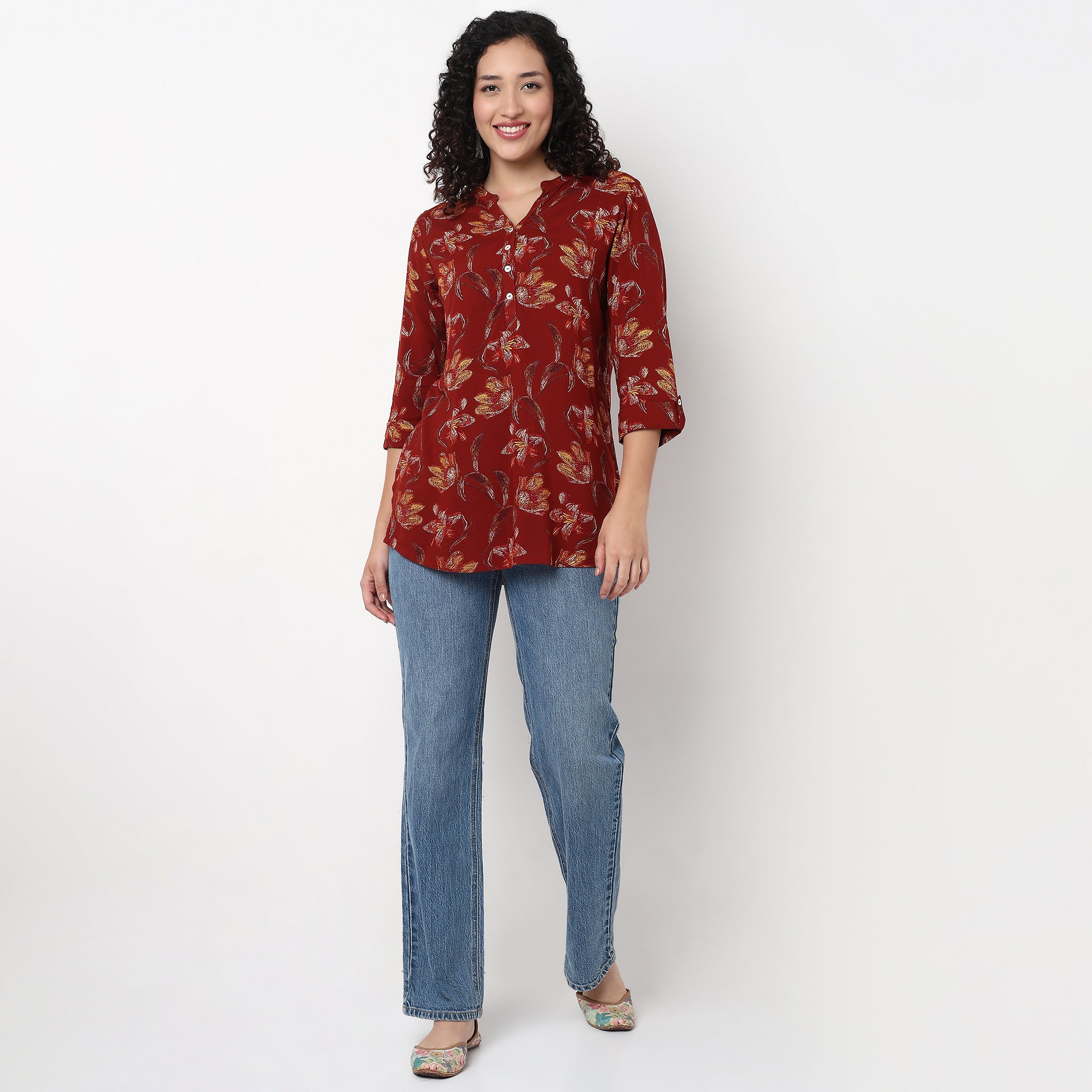
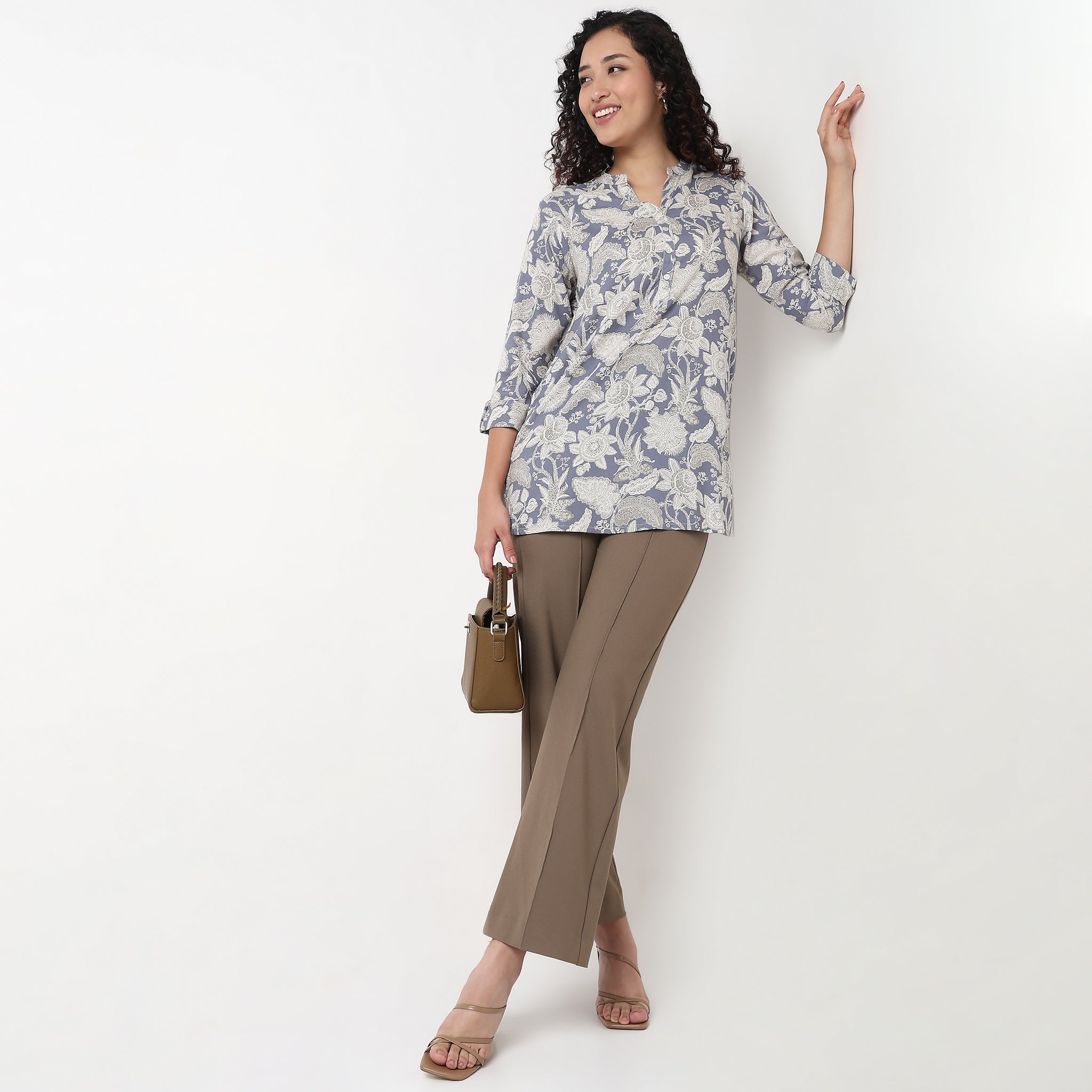
- The pick: a short kurti, ending around the hip or upper thigh.
- Why it reads professional: on its own it skews casual, but layered over tailored bottoms it reads closer to a tunic-and-trouser office look than ethnic wear at all.
- Best paired with: cigarette pants or slim trousers, never jeans, which pulls the whole look back to weekend territory.
- Avoid: wearing it loose and untucked without a defined waist; ask for a slight cinch or a thin belt if the cut allows it.
What bottom wear works best with kurtis for the office?
Cigarette pants and straight tailored trousers are the two safest bottoms for office kurtis, mostly because both keep the silhouette narrow through the leg, which reads more formal than volume does. A wide or flared palazzo isn't wrong exactly, it's just harder to make an intentional look in a boardroom the way it does at a wedding. If your kurti runs short, dark straight-leg denim can work for a genuinely casual Friday, though it's the one combination worth checking your office's actual dress code before trying.
Which fabrics and colours are right for office ethnic wear?
Cotton and viscose blends are the two fabrics worth building an office ethnic wardrobe around, cotton for peak summer since it breathes best, viscose for the rest of the year because it creases far less by 6 pm. A muted palette does more for a professional read than the cut alone: navy, charcoal, olive, soft peach and off-white all photograph well on video calls and don't compete with a blazer or cardigan if you're layering.
Choosing the right kurta set fabric for the season really comes down to matching cotton to peak summer and viscose to the rest of the year, rather than picking on print alone. One thing nobody tells you honestly: some prints wrinkle badly by lunchtime regardless of fabric, so if you're testing a new kurta for office wear, sit in it at home first before you sit in it at your desk.
How do you layer ethnic wear for a more formal work look?
A dupatta is the fastest way to add formality to a sleeveless kurta or kurti without changing the outfit itself, draped simply over one shoulder, it covers the arms and adds structure for a client meeting without needing a whole extra layer. If you want an actual jacket-style layer, Style Union carries a small edit of ethnic jackets and shrugs built for exactly this, worn open over a solid kurta, it does the same job a blazer does over a shirt. The range here is intentionally minimal, so treat the dupatta as your everyday solution and the jacket as the occasional one.
What accessories work with ethnic office wear?
Keep it to one statement piece and one practical one. Small stud earrings or thin bangles won't catch on a laptop bag or a dupatta through the day, and closed flats or low block heels hold up better through a commute than juttis with a heel. Skip the statement neckpiece for the office; save it for after-work plans on the same day.
Quick reference: office ethnic wear rules
- Silhouette: straight-cut or A-line, below-knee length
- Fabric: cotton for summer, viscose the rest of the year
- Colour: muted solids, navy, charcoal, olive, soft peach
- Embellishment: minimal; save heavy work for festive wear
- Footwear: closed flats or low block heels, not juttis with a heel
Kurta set or ethnic co-ord set: which is better for the office?
A straight-cut kurta set, a kurti with tailored trousers, and an ethnic co-ord set all clear the bar for office-appropriate, the difference is really about how much the outfit needs to work outside the office too.
|
What the office asks for |
Straight-cut kurta set |
Kurti with trousers |
Ethnic co-ord set |
|
Reads formal in a corporate office |
High |
High |
Medium to high in a solid |
|
Mix and match across the week |
Low, worn as a set |
High |
High, splits into separates |
|
Comfort through a full desk day |
High |
High |
High |
|
Works for a client meeting |
High |
High with a layer |
Medium |
|
Handles summer commute |
High in cotton |
High in cotton |
High in cotton |
For deeper insights, check out our comprehensive guide at Style Union comparing kurta sets vs ethnic co-ord sets.
How do you build a week of office ethnic outfits from a few pieces?
Five pieces, chosen for how they combine rather than how they look alone, can realistically cover a five-day week without repeating an outfit. And if kurtis alone don't stretch far enough some weeks, the types of tops worth building a wardrobe around cross over well with tailored ethnic bottoms too, a shirt tunic or a structured button-down works nearly as well over cigarette pants as a kurti does.
|
Day |
Outfit |
|
Monday |
Straight-cut navy kurta + cream cigarette pants |
|
Tuesday |
A-line olive kurta + charcoal tailored trousers |
|
Wednesday |
Navy kurta + charcoal trousers + printed dupatta |
|
Thursday |
Olive kurta + cream cigarette pants |
|
Friday |
Either kurta + trousers, dupatta draped for a slightly dressed-up close to the week |
Building an Office Wardrobe That Actually Holds Up
Style Union's ethnic range runs across ethnic kurtas, ethnic kurta sets, kurtis and tunics, with over a thousand kurta styles alone in straight, A-line and short lengths, enough to build a proper five-day rotation without repeating a look too often. With 170+ stores nationwide and a 4.8-star Google rating from over 16 lakh customer reviews, trying the fit in person before committing to a full week's wardrobe is easy enough. If you're starting from scratch, the complete guide to buying kurta sets for women is the right place to begin.


